The ledger breathes, but this morning it held its breath. A threat from Tehran to close the Strait of Hormuz sent crude oil futures spiking and Bitcoin sliding in tandem. Watching the ledger breathe beneath the noise, I recalled the same pattern from 2020—when a drone strike in Baghdad triggered a 10% Bitcoin dump. The market's memory is short, but the structural currents run deep.
Context: The Global Liquidity Map Redrawn
To understand what this geopolitical tremor means for crypto, we must first place it on the global liquidity map. The Iranian warning—an explicit threat to shut down oil wells if sanctions tighten—is not just a headline; it is a signal in a system already stretched thin. Central banks across the developed world are still in tightening mode. The Federal Reserve has kept rates at restrictive levels, draining excess reserves from the banking system. Quantitative tightening continues to pull liquidity out of the market at a rate of $95 billion per month. The European Central Bank is mired in a slow-motion recession, while the Bank of Japan is only beginning to normalize its yield curve control.
Into this fragile liquidity environment comes an energy supply shock. The Strait of Hormuz carries about 20% of global oil consumption. A sustained closure would spike oil prices to levels unseen since 2008—potentially above $150 per barrel. That would reignite inflation expectations, forcing central banks to delay rate cuts. The consequence for risk assets? Compressed multiples, reduced risk appetite, and a flight to cash.
I learned this lesson early. In 2017, as a junior quantitative analyst for a Bangkok-based hedge fund, I spent months mapping the correlation between ICO capital flows and Thai Baht liquidity injections. I authored a 40-page memo titled "The Illusion of Decentralized Liquidity," predicting that unregulated issuance would eventually trigger capital controls. The memo was ignored, but the pattern held: crypto is not a closed system—it is a liquid proxy for global macro conditions. Every oil price jump, every central bank pivot, every geopolitical flashpoint ripples through the same neural network of capital flows. The ledger does not forget its underlying economic gravity.
Core: Crypto as a Macro Asset—The Pulse of the System
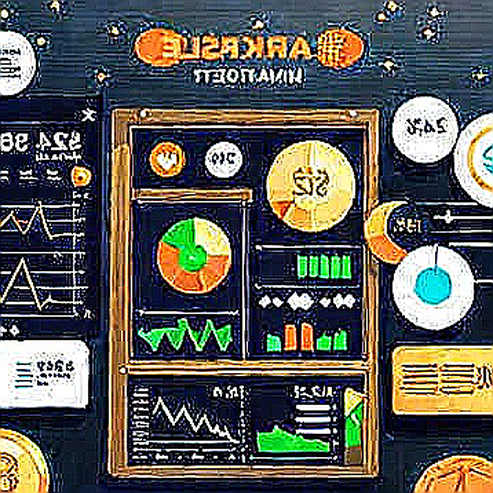
So what does the data say? Let us examine the immediate market reactions and the deeper structural shifts. Within hours of the Iranian threat, Bitcoin dropped from $68,000 to $62,000—a 9% decline. Ethereum fell by 11%. The total crypto market capitalization shed $150 billion. But these numbers are only the surface. The real story lies in the derivative markets and stablecoin flows.
Funding rates across major perpetual swaps flipped sharply negative, reaching -0.01% on Binance and -0.015% on Bybit. That means short sellers are paying longs—a clear signal of bearish sentiment dominating leveraged positions. Over $400 million in long positions were liquidated in a single day, primarily on Bitcoin and Ethereum. The open interest dropped by 8%, indicating deleveraging. Volatility is just truth seeking equilibrium—but the truth here is that the market was caught off guard.
More telling is the movement of stablecoins. The price of USDT on Binance briefly traded at a 0.5% premium, suggesting that traders were rushing into stablecoins for safety. At the same time, on-chain data from Glassnode shows that exchange stablecoin reserves increased by $2 billion, a classic sign of de-risking. Meanwhile, Tether's market cap remained flat, meaning no new money entered the system—only existing capital rotated out of volatile assets.
But is this reaction rational? The linkage between Middle East oil and Bitcoin mining is direct: a significant portion of Bitcoin's hash rate still relies on subsidized or cheap energy. If oil prices spike, electricity costs rise for many miners, especially in Kazakhstan, the Middle East, and some parts of the United States. The average cost of producing one Bitcoin is currently around $25,000. A 50% increase in energy costs could push that to $37,000, narrowing margins and forcing less efficient miners to sell their holdings. On-chain miner flows show that miners have started moving coins to exchanges—the 30-day miner outflow reached 3,500 BTC, the highest since June 2024.
But the deeper macro link is through inflation expectations. Rising oil prices feed into headline CPI projections. The bond market is already pricing this: the 10-year breakeven inflation rate jumped 12 basis points on the day. If inflation expectations become unanchored again, the Fed will have no choice but to keep rates high for longer. That is a direct headwind for all risk assets, including crypto. The correlation between Bitcoin and the Nasdaq 100 has been hovering around 0.6 over the past year. In a liquidity tightening scenario, that correlation tends to rise toward 0.8.
Yet, there is a layer of complexity that most surface-level analyses miss. We minted souls but forgot the container. The container is the global financial infrastructure. During the 2020 DeFi summer, I led a risk modeling team for a Singaporean protocol integrating with Aave. We stress-tested the protocol's exposure to algorithmic stablecoins. I published a white paper warning that Terra's TerraUSD was metastasizing systemic fragility. I was fired for that paper—but I was right. The lesson was that protocol health is not just about collateral ratios; it is about the underlying economic assumptions. Today, the assumption that oil prices will remain stable is baked into many DeFi lending protocols' stress models. That assumption is now broken.
Contrarian: The Decoupling Thesis—When the Noise Becomes the Signal
The dominant narrative emerging from this event is that crypto is just another risk asset, and its supposed status as a hedge is a myth. But that narrative is itself a product of the current market cycle. The contrarian view—the one that history might validate—is that this very crisis could become the catalyst for crypto's decoupling from traditional risk assets.
Consider the following: traditional markets are closed for weekends and holidays. Capital controls can be imposed overnight. In 2020, when the COVID crash hit, many exchanges in Europe temporarily halted trading. In 2022, the Russian invasion of Ukraine led to swift sanctions that froze assets held in Western banks. In such environments, a permissionless, globally transferable asset becomes the only liquidity channel. Bitcoin did not decouple in 2022 because the sanctions were limited. But imagine a full-scale Iran conflict: Iranian citizens and even some neighboring countries might face severe restrictions on dollar access. Crypto becomes not a speculative asset but a lifeline.
I experienced this firsthand during my work with the Bank of Thailand and the Ethereum Foundation on a CBDC interoperability pilot in 2025. I modeled how central bank digital currencies could settle cross-border payments using zero-knowledge proofs for privacy. The pilot revealed a critical insight: even with CBDCs, the infrastructure for peer-to-peer value transfer still relies on traditional banking rails. In a sanctions scenario, those rails can be severed. Public, permissionless blockchains cannot be severed—they are the ultimate fallback.
The blind spot of many analysts is that they view correlation as permanent. They say, "Bitcoin fell alongside stocks, therefore it's not digital gold." But correlation is contextual. During the first hour of the oil spike, Bitcoin indeed fell. But by the end of the day, it recovered 4% of its losses, while the S&P 500 remained near lows. That slight divergence is a whisper of decoupling. In the days ahead, if the conflict escalates, we may see a bifurcation: crypto that is associated with energy-intensive mining (like Bitcoin) might underperform, while more efficient, Proof-of-Stake networks like Ethereum or Solana could become relative safe havens.
Moreover, the regulatory response to this crisis could flip the narrative. When sanctions expand, the demand for privacy-preserving assets like Monero or Zcash could surge. And the scrutiny on stablecoins will intensify—but not all stablecoins are equal. Those with transparent reserves and real-world collateral (like USDC) might gain trust, while algorithmic or opaque stablecoins could face a liquidity crunch. The protocol remembers what the user forgets: the structural fragility exposed by this shock will separate the sound from the unsound.
I recall a conversation with a founder of one of the major DAOs during my ethnographic study in 2021. He said, "We built communities with tokens, but we didn't build a shelter for when the storm comes." That shelter is now being tested. The decoupling thesis does not require a binary outcome; it requires a role differentiation. In this crisis, crypto will not replace gold or the dollar. It will become a complementary layer for those who need to move value outside traditional constraints.
Takeaway: Cycle Positioning in the Macro Reset
Where does this leave us in the cycle? The bear market of 2022-2023 is behind us, but the recovery has been uneven. We are in an accumulation zone, but one that is punctuated by macro jolts. The smart positioning is not to chase the narrative of the day, but to prepare for a regime shift.
Over the next 3-6 months, three things will determine the trajectory: the actual escalation of the conflict, the central bank response to the oil shock, and the readiness of crypto infrastructure for a sanctions-heavy environment.
If the conflict de-escalates, expect a sharp relief rally. Oil prices will retreat, inflation expectations will normalize, and risk assets will resume their upward path. But if it escalates, we enter a different regime: one where crypto's role as a global settlement layer becomes visible even as its price may fall initially. The opportunity lies in assets that are structurally resilient: Bitcoin with clean energy mining (a shift that could accelerate), Ethereum with its deep liquidity and proof-of-stake efficiency, and stablecoins with full reserve backing.
Between the code and the conscience lies the gap. The code is the protocol—the immutable ledger. The conscience is the market's collective judgment of value. In this gap, we find the true nature of the asset. This oil price tremor is not just a test of Bitcoin's correlation; it is a test of our conviction in the idea that a decentralized asset can exist alongside sovereign currencies. I have spent 16 years observing this industry, from the ICO mania to the DeFi mirage to the NFT soul search. Every crisis has strengthened the underlying structure. This one will be no different.
Watching the ledger breathe beneath the noise, I am reminded that silence in the blockchain is a loud statement. Right now, the ledger is whispering caution. But those who listen carefully will hear the first notes of a new movement—one where crypto sheds its purely speculative skin and becomes a functional part of the global financial immune system.
Tracing the shadow of value across borders, I see the outline of a future where the macro is not the enemy but the teacher. The lesson is to prepare, not to panic. The cycle turns, but the principles remain. Hold the infrastructure, respect the liquidity, and never underestimate the power of a permissionless exit.