In the quiet of a Brussels regulatory meeting, an announcement was made that sent ripples through the diplomatic world: the European Union temporarily paused its sanctions on Russian alumina imports. The official reasoning was framed as a strategic recalibration—an attempt to avoid destabilizing global aluminum markets. But tracing the code of cross-border financial flows reveals a different narrative. The real story lies in the shadows of a parallel financial system, where cryptocurrency has become the silent enabler of trade circumvention.
The EU’s investigation into possible crypto-based evasion of sanctions has been ongoing for months, with Irish authorities leading the charge. According to recent reports, the probe is nearing its conclusion, focusing on how digital assets might be used to bypass restrictions on critical commodities like alumina. This is not a new concern. Since the onset of the war in Ukraine, regulators have increasingly eyed the crypto ecosystem as a potential loophole. But what the market often misses is that this is not about a few rogue traders using Bitcoin to buy aluminum. It’s about a systematic, protocol-level vulnerability that institutional players are beginning to exploit.
In the quiet, the protocol reveals its true intent. As a researcher who spent the bear market of 2022 dissecting the failure modes of stablecoins after the Terra collapse, I learned one immutable truth: the code does not lie. The mechanisms that make cryptocurrency borderless and permissionless also make it an attractive tool for evading economic sanctions. When the EU froze assets of Russian oligarchs, the immediate public narrative focused on yachts and real estate. But beneath that, a quieter flow of value was already moving through decentralized channels.
The technical core of this evasion lies in the use of stablecoins and privacy-enhancing technologies. Stablecoins pegged to USD allow for value transfer without exposure to volatile crypto markets. Platforms like USDC and USDT are widely used for cross-border settlement, precisely because they mimic the functionality of traditional bank wires without the same level of surveillance. However, the cryptographic guarantees of these tokens are only as strong as the compliance layers built around them. My own audit experience in 2021, when I identified a signature forgery vulnerability in OpenSea's off-chain order matching, taught me that security is multidimensional. It’s not just about smart contracts—it’s about the entire operational ecosystem.
We audit not to judge, but to understand. In the context of EU sanctions, the audit extends beyond code to include the regulatory interface. For example, centralized exchanges operating under EU licenses have rigorous KYC/AML obligations. But the moment funds move to a non-custodial wallet or a decentralized exchange, the traceability drops exponentially. Mixers like Tornado Cash, though already sanctioned by OFAC, still have clones and successor protocols operating on Layer 2 solutions. This is where the true risk lies: not in Bitcoin, but in the burgeoning layer of privacy-focused rollups and cross-chain bridges that obscure the flow of funds.
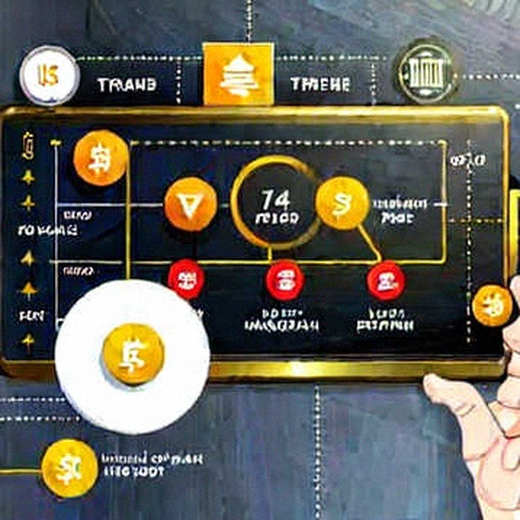
Let’s be precise about the technical mechanism. A typical evasion pattern might involve a Russian entity converting rubles into USDT via a peer-to-peer exchange, then bridging that stablecoin to a privacy-focused network like Monero via a decentralized aggregator. From there, the funds can be swapped back to USDC or ETH on a compliant chain, effectively laundering the origin. The key point is that each step is separately legal, but the combination creates a forbidden loop. The code allows it; the protocol does not distinguish between a legitimate trade and a sanctioned one.
Authenticity is not minted, it is verified. This is where the contrarian angle emerges. The popular narrative among regulators is that crypto is a threat to sanctions enforcement. But I argue the opposite: the transparency of blockchain technology actually provides an unprecedented audit trail for investigators. Every transaction is permanently recorded. The challenge is not the lack of visibility but the fragmentation of jurisdiction. When a transaction touches five different blockchains across three continents, who has the authority to freeze it? The issue is not cryptographic but legal.
Moreover, the scale of crypto-based sanctions circumvention is likely exaggerated. Traditional fiat channels—such as shell companies, trade misinvoicing, and correspondent banking relationships—still dominate the evasion landscape. According to data from Chainalysis, the volume of Russian-linked crypto transactions associated with sanctions evasion is a fraction of a percent of total trade flows. The real problem is that regulators are fighting the last war: they focus on crypto because it’s new and poorly understood, while the old systems remain porous.
Every pixel carries a history we must respect. In my work analyzing the integration of zero-knowledge proofs into institutional custody solutions in 2025, I observed a subtle but critical pattern: the difference between privacy and anonymity. Privacy allows selective disclosure—a user can prove they are not a sanctioned entity without revealing their identity. Anonymity offers no such nuance. The EU investigation could inadvertently push the entire crypto industry toward a binary choice: either implement compliance layers that satisfy regulators, or face the same fate as Tornado Cash. But this is a false dichotomy. The technology exists to build compliant privacy. The question is whether the industry has the will to adopt it.
Let’s consider the specific commodity at the center of the sanctions: alumina. This is not a high-value, low-volume good like diamonds. It is a bulk industrial material. To source alumina and pay for it using crypto, a buyer would need to convert enormous amounts of fiat into stablecoins, execute trades, and then have the seller accept digital assets. This requires a sophisticated infrastructure of intermediaries, each of whom is a point of failure. The EU’s investigation, if concluded, will likely reveal not a single mastermind but a network of small players exploiting regulatory gaps.
Tracing the code back to the silence of 2017, I recall the early days of ICOs, when technology was hailed as the solution to all trust issues. We have since learned that code alone cannot enforce ethics. The current bull market euphoria masks these technical and regulatory risks. Every freshly funded project claiming to be “sanction-proof” should be examined with the same rigor we applied to Bancor’s smart contracts back in 2017. The vulnerability is not in the code but in the narrative.
What happens next? The EU’s final report will likely recommend increased surveillance of mixeders and privacy coins, perhaps even requiring all Layer 2 solutions to implement on-chain identity verification for institutional users. This will not kill crypto, but it will reshape it. The market will bifurcate into two tiers: compliant and permissionless. The latter will shrink, becoming a haven for a smaller, risk-tolerant user base. The larger economy will converge with traditional finance, losing some of its revolutionary edge.
The takeaway is not fear but foresight. The quiet protocol of sanctions evasion is exposing the gap between technological capability and regulatory reality. We must respect that every transaction carries a history—of intent, of jurisdiction, of ethics. As we watch the EU’s probe unfold, the true measure of this industry will not be its ability to circumvent but its willingness to verify. Solitude clarifies the signal amidst the noise, and in this moment of regulatory focus, the signal is clear: compliance is not optional; it is the new layer of trust.